Advertorial
5 Signs Your Chronic Sinus Pressure Is Actually a Neck Problem — And How To Reverse It
By Dr. Rachel Morrison, Upper Cervical Specialist
Last Updated March 28, 2026
You were diagnosed with chronic sinusitis.
The pressure across your cheeks is constant. The fullness behind your eyes never lifts. Your face feels like a concrete block.
So they put you on Flonase. Antibiotics. Neti pots twice a day. Zyrtec, Claritin, Allegra — rotating through every allergy medication hoping something finally works.
But here's what nobody told you:
Over 60% of patients diagnosed with chronic sinusitis have compressed nerves at the top of their neck that have never been examined.
Your sinuses aren't diseased.
Something is compressing the nerves that refer sensation to your face.

Sign #1: The Base of Your Skull Aches (But Your Doctor Ignores It)
You mention the constant tension at the base of your skull. The tightness in your neck that never goes away.
Your ENT nods and says "that's just tension from dealing with sinus problems."
But here's the thing:
Chronic sinusitis patients don't need neck tension. It's nowhere in the diagnostic criteria.
Patients with cervicogenic facial pain? That tight band at the base of the skull is almost always present.
That ache where your skull meets your spine? Those are your suboccipital muscles — tiny, deep muscles at C1-C2 that sit directly on the occipital and trigeminal nerve pathways.
When they lock up from years of tension, they refer sensation straight to your cheeks, behind your eyes, and across the bridge of your nose.
Your neck isn't reacting to your sinusitis.
Your neck is causing it.

Sign #2: The Pressure Never Fully Goes Away (No Matter What You Take)
When you describe your symptoms, you say things like:
"It's like someone is pressing their thumbs into the bridge of my nose."
"The fullness behind my eyes never lifts."
"I wake up with my face already heavy."
Your doctor hears "facial pressure" and writes
down "chronic sinusitis."
But here's the critical difference:
Real sinusitis: Pressure flares with infection, then clears with treatment. Your CT scan shows inflammation. Antibiotics knock it out within a week or two.
Cervicogenic facial pain: The pressure never fully goes away. You wake up with it. It's there at your desk. It's there scrolling your phone in bed. And every scan comes back clear.
Why?
Because compressed nerves at C1-C2 fire constantly.
→ Your trigeminal pathways get scrambled signals (facial pressure, fullness)
→ Your brain misreads them as sinus congestion 24/7 (heaviness that never lifts)
→ Your balance centers get faulty input (that walking-on-a-boat dizziness)
The medications try to reduce inflammation and fight infection.
But they can't fix compressed nerve tissue that's active all the time.

Sign #3: Bad Posture Makes Everything Worse
You've noticed the pattern:
After sitting at your desk for hours — worse.
After looking down at your phone — worse.
After a long car ride — worse.
Your ENT says "must be a change in air quality" or "seasonal triggers."
But real sinusitis triggers are usually:
Allergens. Infection. Weather changes. Dust.
Your triggers are:
Neck position. Sitting too long. Looking down.
Every time you look down at your phone, you put 60 pounds of pressure on your neck. Your already-tight C1-C2 muscles clamp tighter.
They press harder on those facial nerves. The pressure across your cheeks builds. The fog rolls in.
No amount of nasal spray can fix nerve compression in your neck.

Sign #4: Certain Neck Movements Set Off Instant Symptoms
Tilting your head back to rinse shampoo — pressure floods in.
Turning quickly to check traffic — a wave of dizziness.
Looking up at a shelf — the fullness behind your eyes intensifies.
Craning over your desk — the heaviness settles across your face.
Sinusitis doesn't spike from turning your head.
Cervicogenic facial pain does.
Because every movement shifts those tight C1-C2 muscles. They compress the nerves for a moment. And your symptoms explode.
Your ENT ran a CT scan. Checked for inflammation. Ordered an allergy panel.
But they never tested how your symptoms respond to neck movement.
Because in their training, sinus pressure is about drainage and inflammation — not about what happens when you tilt your head.
When you mentioned the movement triggers, they waved it off.
They never considered your neck was causing everything.

Sign #5: The Sinus Treatments Don't Actually Work
You've done everything they told you to do.
Flonase. Your nose bleeds, the pressure stays.
Antibiotics. Helped for a week, then it all came back.
Neti pots twice a day. Still heavy. Still foggy.
Zyrtec, Claritin, Allegra. No difference.
Sleeping propped on three pillows. You still wake up with a concrete block for a face.
Your doctor says "some people just have persistent inflammation" or "let's try a stronger steroid."
But here's what's really happening:
Sinus treatments work when you have a sinus problem.
When patients with actual chronic sinusitis take antibiotics and steroids, their scans clear and their symptoms improve dramatically.
Your scans were already clear. And your symptoms barely budged.
Why?
Because you don't have diseased sinuses.
You don't have permanently inflamed drainage pathways.
You have compressed nerves at the top of your neck.
And no medication on earth can decompress a nerve.

4 Out of 5 People With Cervicogenic Facial Pain Are Misdiagnosed
Here's why:
Most ENTs never examine your neck. They order a CT scan. Run an allergy panel. Check for inflammation.
Scan comes back clear.
Diagnosis: "chronic sinusitis, some people just have it."
What they missed:
Your neck was never part of the evaluation.
Studies show that when patients with "chronic sinusitis" receive targeted treatment for upper cervical compression — deep muscle release and traction at C1-C2 — the majority see major symptom reduction.
But most ENTs don't know about this research.
Because pharmaceutical companies can't patent neck treatment.
No profit means no education.
So you keep getting prescribed sprays and antibiotics that can't possibly address nerve compression.
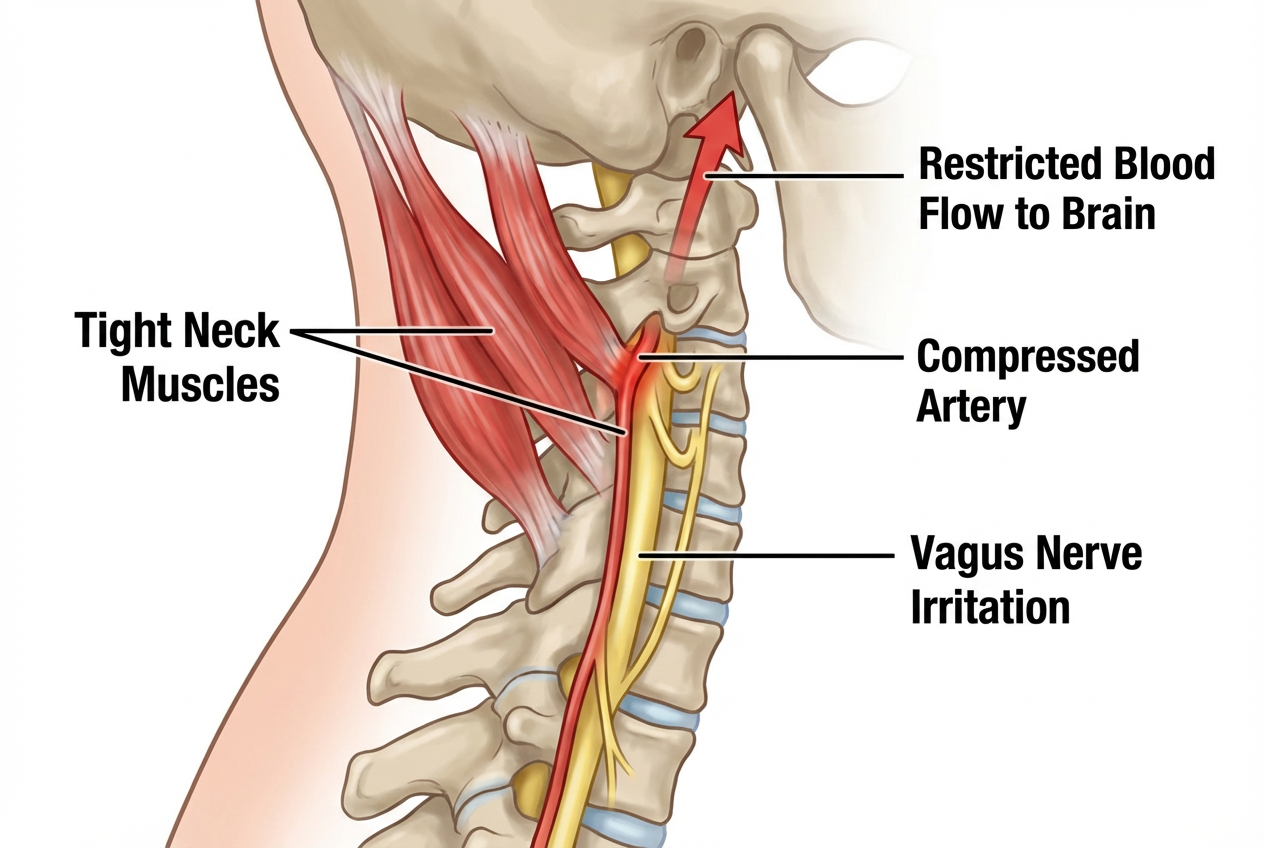
So What IS Cervicogenic Facial Pain?
It's sinus-like symptoms caused by compressed nerves at C1-C2 — where your skull meets your spine.
When the deep suboccipital muscles at the base of your skull become chronically tight, they:
→ Compress the occipital nerves (referring pressure and heaviness to your face)
→ Irritate the trigeminal nerve pathways (causing fullness across the cheeks, behind the eyes, and the bridge of the nose)
→ Disrupt balance signals (that constant, walking-on-a-boat dizziness)
And there's a secondary layer: chronic compression can actually restrict your sinuses' real drainage pathways, making you more prone to the occasional genuine infection. That's why antibiotics sometimes helped — they cleared a real secondary infection — while the underlying pressure was never touched.
This explains:
✓ Why the pressure across your face never lifts
✓ Why you feel foggy and dizzy for no reason
✓ Why all your scans come back normal
✓ Why moving your neck makes it worse
✓ Why steroid sprays and antibiotics don't fully work
✓ Why the base of your skull always aches
Your nerves need to be decompressed.
Your muscles need to release.
Nothing else will fix this.

Recent Research Confirms the Neck-Sinus Connection
A recent study examined patients diagnosed with chronic sinusitis who had persistent upper-neck tension and clear scans.
They received targeted treatment for cervical compression: deep heat therapy, electrical muscle stimulation, and cervical traction at C1-C2.
Result: the overwhelming majority reported major symptom reduction within 4-6 weeks.
Facial pressure dropped. Dizziness cleared. The fog lifted.
But most ENTs don't know about this research.
So you keep treating sinuses when the real problem is compressed nerve tissue.
Over 47,000 People Have Found Relief With Neckline
Meet the device that's changing everything:
Neckline uses a precisely engineered 26-degree angle positioned exactly where those deep cervical muscles sit at C1-C2.
How it works:
Heat Therapy: Relaxes superficial muscles and increases blood flow.
EMS Technology: Reaches the deep suboccipital muscles that massage can't touch — forcing them to contract and release, breaking up chronic tension.
Ergonomic Positioning: The 26-degree angle targets C1-C2 specifically, not your entire neck.
The result?
The compressed nerves decompress.
The trigeminal pathways stop firing false pressure signals.
The heaviness across your face lifts. The fog clears. The dizziness fades.
What Others Are Saying
Linda, 52: "I was diagnosed with chronic sinusitis at 49. Flonase made my nose bleed but never touched the pressure. Two weeks with Neckline, and the constant heaviness across my face is GONE. Turns out it was my neck the whole time."
Sarah, 49: "Five years of neti pots and rotating antibiotics. My scans were always clear but my face always felt like concrete. Started using Neckline daily, and within three weeks I woke up with zero facial pressure for the first time in years. My ENT was stunned."
Kevin, 47: "Every CT came back clean but the pressure and dizziness never stopped. This device released the compression in my neck and my 'sinusitis' basically disappeared. I'm off the sprays completely now."
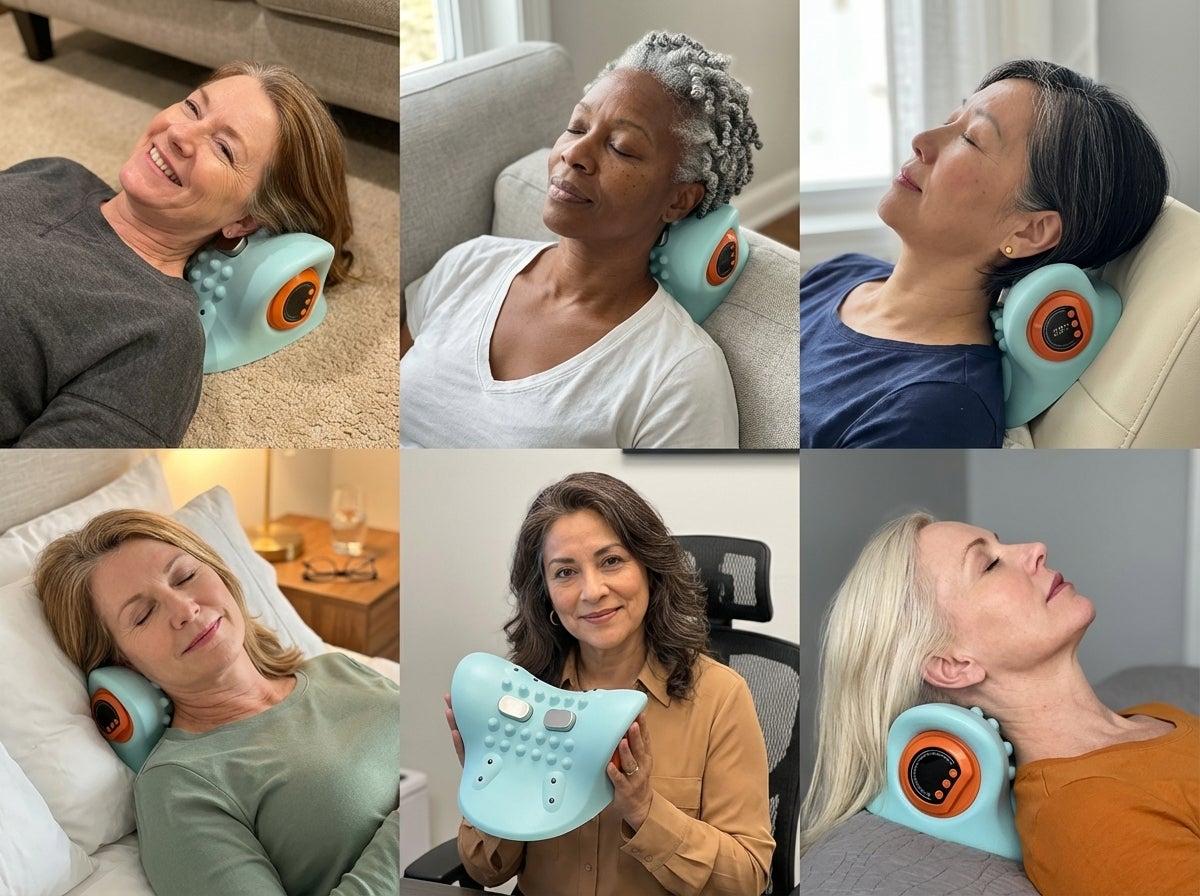
A Message From Rachel, The Founder
Look, I know what you're thinking.
"Another device? Another thing that won't work?"
I treated facial pain and sinus complaints for 11 years before I understood the cervical connection.
When I started examining C1-C2 in patients with "chronic sinusitis," I found the same pattern over and over:
Chronically tight suboccipital muscles. Compressed facial nerves. Clear scans that made no sense next to their misery.
When I released that compression with manual therapy, patients who'd cycled through years of sprays and antibiotics improved within weeks.
But I could only treat 20 patients a week.
That's why I created Neckline® — to deliver the same decompression at home.
Why hasn't your ENT told you about this?
Because they don't know it exists.
Standard sinus workups almost never include a proper neck examination.
When you present with facial pressure and clear scans, they run more scans, more allergy panels, more antibiotics.
But checking C1-C2 muscle tension? Rarely part of the protocol.
Research shows cervical compression is present in over 60% of patients with unexplained facial pressure.
But if they don't check the neck, they'll never find it.
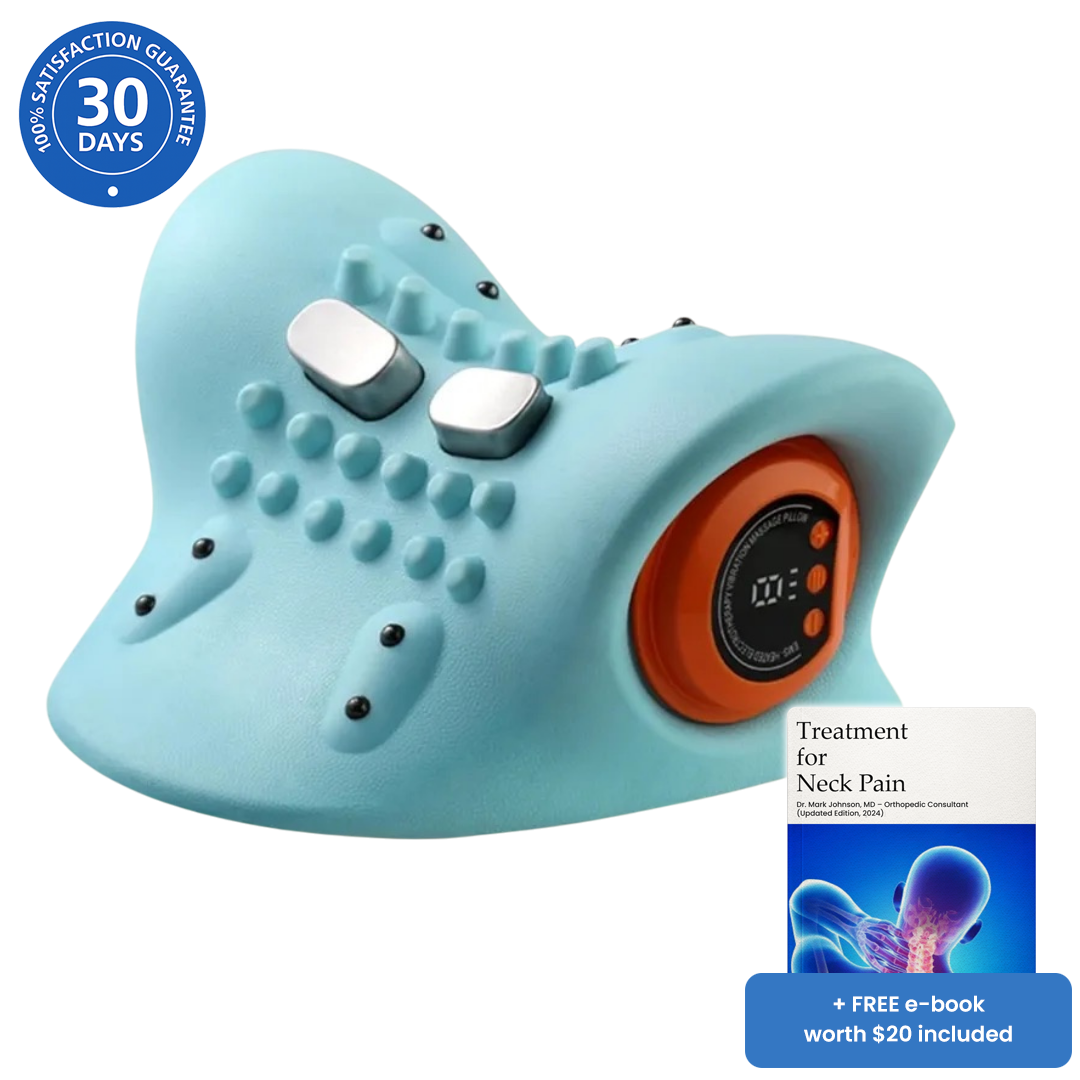
SPECIAL OFFER:
As an exclusive offer for readers of my blog, the Neckline is now offering 50% Off + Free Shipping to all new customers.
But this incredible deal only lasts while there's still inventory available, and my sources inside the company say they'll be completely sold out within 2 hours!
Plus, you have 30 days to test out your Neckline, and if you don't like it for any reason, you can get a full refund no questions asked.
Remember, there's a HUGE discount when you order 2 Neckline devices (89% of Neckline customers order 2 pieces, to give to family, have as a backup!)
Click the link above to see if Neckline™ is still offering a 50% discount and free shipping.

REVIEWS
This is how our website visitors rated Neckline™.
Based on 759 Reviews