Advertorial
5 Signs Your "Migraines" Are Actually Cervicogenic Headaches
By Dr. Rachel Morrison, Upper Cervical Specialist
Last Updated March 28, 2026
You were diagnosed with chronic migraines.
The symptoms were textbook. Debilitating headaches. Light sensitivity. That familiar pressure behind your eye.
So they put you on Sumatriptan. Topamax. Aimovig injections. Botox—31 injections across your forehead.
But here's what nobody told you:
Over 60% of patients diagnosed with chronic migraines have cervicogenic headaches originating from their neck that were never properly examined.
Your brain isn't broken.
Something is compressing nerves at the base of your skull.

Sign #1: Your Neck Hurts (But Your Neurologist Ignores It)
You mention the constant ache at the base of your skull. The tension that never goes away.
Your neurologist nods and says "that's common with migraines—muscle tension from the pain."
But here's the thing:
Migraine patients don't need neck pain. It's not part of the diagnostic criteria.
Patients with cervicogenic headaches? Neck pain and stiffness are almost always present.
That ache at the base of your skull? Those are your suboccipital muscles—tiny, deep muscles at C1-C2 that sit directly on the occipital nerves.
When they're chronically tight, they compress the nerves that refer pain to your temples, behind your eyes, and across your forehead.
Your neck isn't reacting to your migraines.
Your neck is causing them.

Sign #2: Moving Your Neck Changes the Pain
You've noticed the pattern:
Turning your head quickly to check traffic—the pain intensifies.
Tilting your head back in the shower—immediate pressure spike.
Looking down at your phone for too long—headache building.
Certain sleeping positions—you wake up with a full-blown "migraine."
Your neurologist says "stress" or "sleep disturbance."
But here's the critical difference:
True migraines:
Triggered by sensory input (bright lights, loud noises), stress, certain foods, or hormones. Neck position doesn't change the pain intensity.
Cervicogenic headaches:
The pain is directly influenced by neck movement and position. Turning, bending, or applying pressure to specific spots at the base of your skull makes it worse—or better.
Why?
Because cervicogenic headaches originate from compressed structures in your cervical spine.
When tight C1-C2 muscles compress your occipital nerves:
→ Your head gets constant pain signals that feel exactly like migraines
→ The pain refers from your neck upward to your temples and forehead
→ Moving your neck changes the compression—and changes the pain
The medications try to block migraine pathways in your brain.
But they can't fix compressed nerve tissue in your neck that's active all the time.
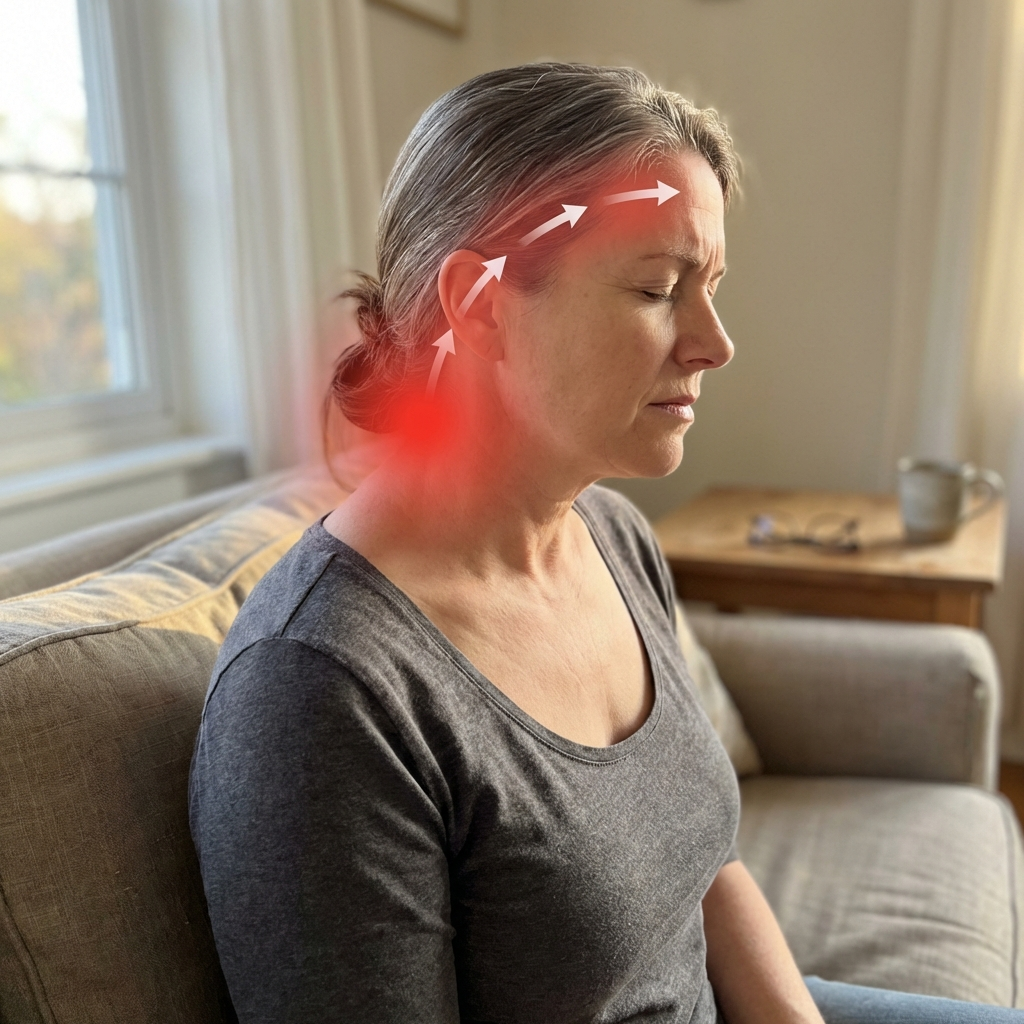
Sign #3: The Pain Starts in Your Neck and Travels Forward
When you describe your headaches, you say:
"It feels like the pain starts at the back of my head."
"It begins at the base of my skull and travels up and around to my forehead."
"Sometimes it radiates from my neck all the way to behind my eye."
Your neurologist hears "unilateral headache" and writes down "migraine."
But here's what they missed:
True migraines:
Pain typically starts in the temples or forehead. It's frontal. The pain begins where you feel it most—around your eye, across your forehead.
Cervicogenic headaches:
Pain starts in the neck or back of the head (occiput) and travels forward. It radiates upward from the base of your skull toward your temples and eyes.
The pain follows the exact path of your occipital nerves.
These nerves run from C1-C2 up the back of your head to your temples and forehead.
When muscles compress them at the base of your skull, they send pain signals along that entire pathway—from back to front.
That's why your "migraine" always feels like it's starting in your neck and moving forward.
Because it is.
Your neurologist ran a brain MRI. Checked for neurological causes.
But they never examined the muscles at the very top of your neck.
Because in their training, headaches come from the brain. Not from compressed nerves that radiate forward from your neck.
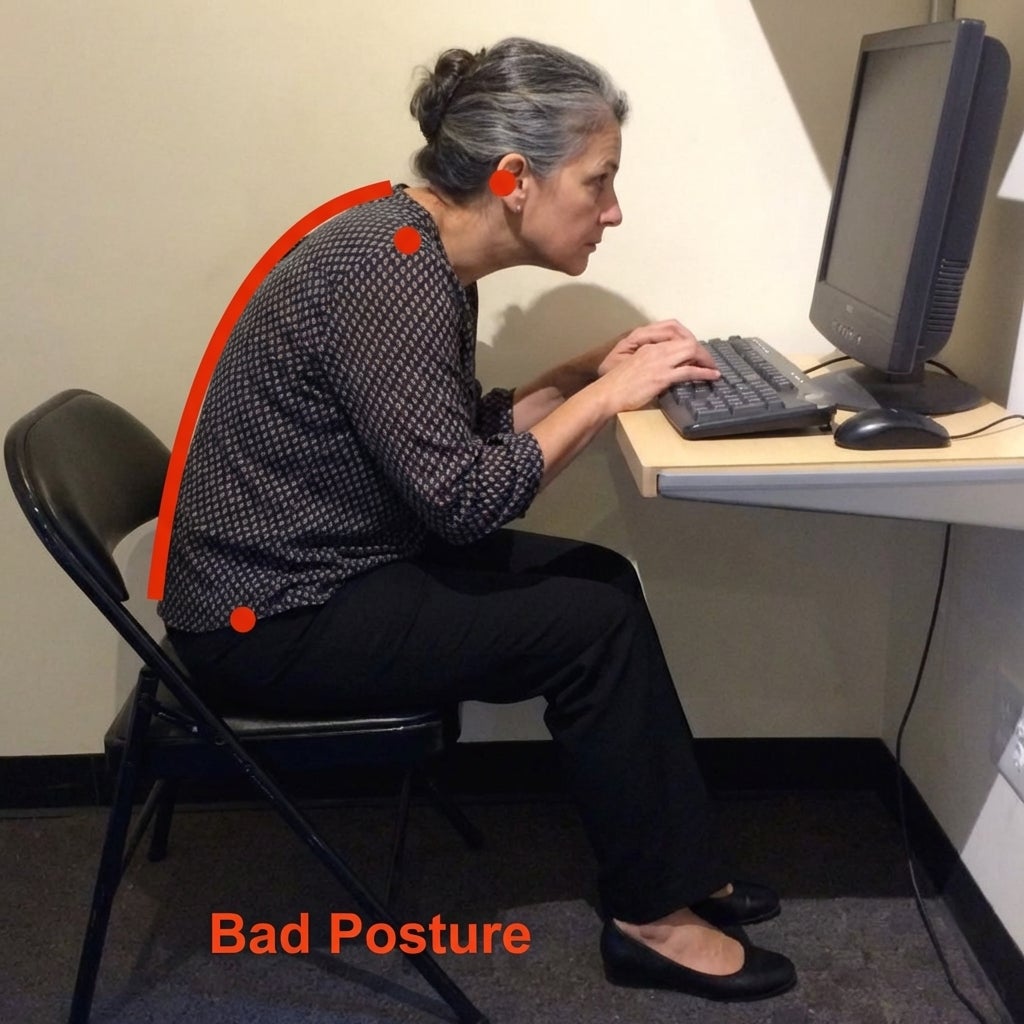
Sign #4: Bad Posture Makes Everything Worse
You've noticed the pattern:
After working at your desk for hours—worse.
After looking down at your phone—worse.
After a long drive with your head forward—worse.
After sleeping on the wrong pillow—you wake up with a full headache.
Your neurologist says "stress" or "trigger avoidance."
But true migraine triggers are usually:
- Bright lights
- Loud sounds
- Certain foods
- Hormonal changes
- Weather shifts
Your triggers are:
- Neck position
- Sitting too long
- Looking down
- Forward head posture
Every time you look down at your phone, you put 60 pounds of pressure on your neck. Your already-tight C1-C2 muscles get tighter. They compress your occipital nerves more. The pain builds.
No amount of Sumatriptan can fix nerve compression caused by posture.
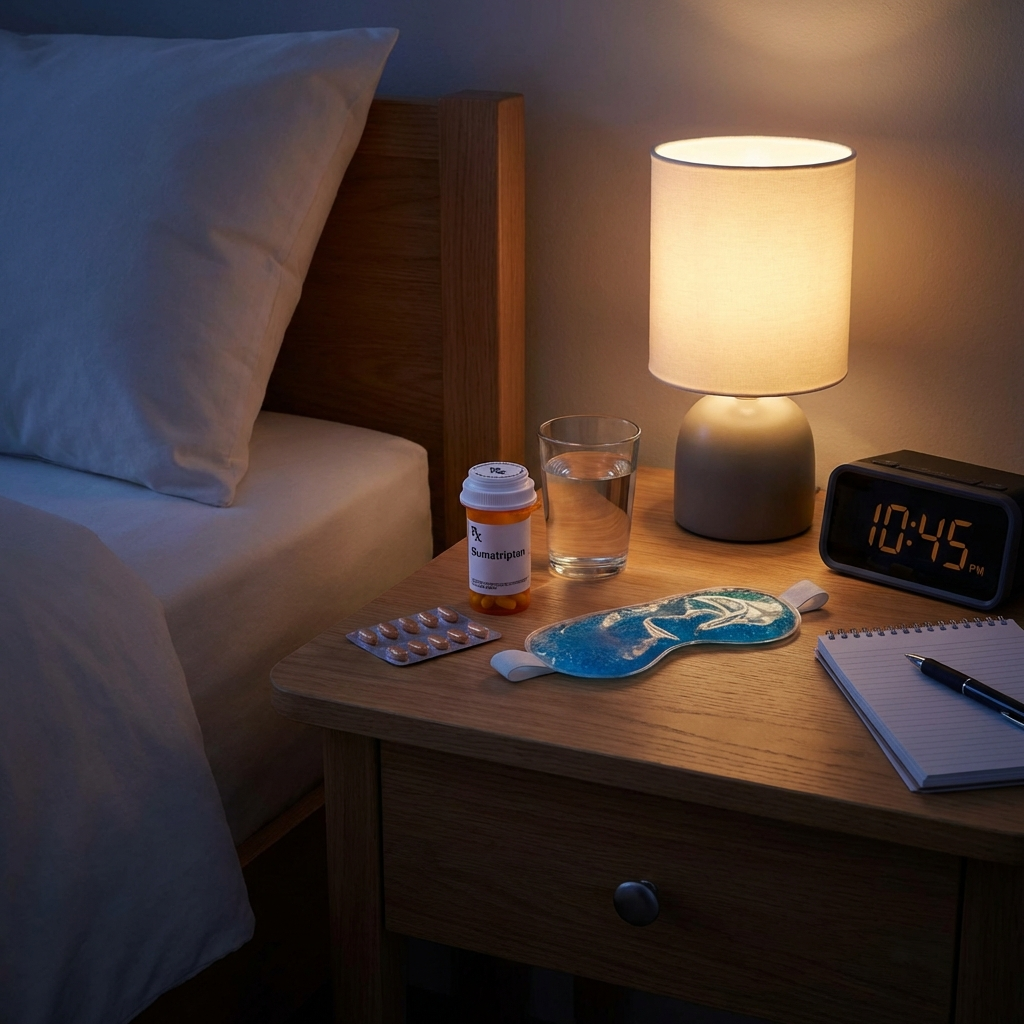
Sign #5: The Migraine Medications Don't Actually Work
You've done everything your neurologist told you to do.
Sumatriptan.
Works sometimes. Stops working. Rebound headaches.
Topamax.
Brain fog so bad you can't finish sentences at work.
Aimovig.
Constipation. Some relief for a few weeks. Then nothing.
Botox.
31 injections. Eight weeks of relief. Then the headaches came back.
Your doctor says "it takes time" or "let's try a different preventive" or "maybe increase the dose."
But here's what's really happening:
Migraine medications work when you have migraines.
When patients with actual migraines take triptans and preventives, their symptoms improve 60-80% within 4-8 weeks.
Your symptoms barely budged.
Why?
Because you don't have a migraine disorder.
You don't have overactive pain pathways in your brain.
You have compressed occipital nerves at C1-C2.
And no amount of medication can decompress a nerve.

4 Out of 5 People With Cervicogenic Headaches Are Misdiagnosed
Here's why:
Most neurologists never examine your neck. They check for neurological signs. Order a brain MRI. Run some blood work.
Symptoms match classic migraine criteria.
Diagnosis: Chronic migraines.
What they missed:
Your neck was never part of the evaluation.
Studies show that when patients with "chronic migraines" receive targeted treatment for cervicogenic headaches—manual therapy, deep muscle release, and traction at C1-C2—over 80% see significant symptom reduction.
But most neurologists don't know about this research.
Because pharmaceutical companies can't patent neck treatment.
No profit means no education.
So you keep getting prescribed medications that can't possibly address nerve compression.
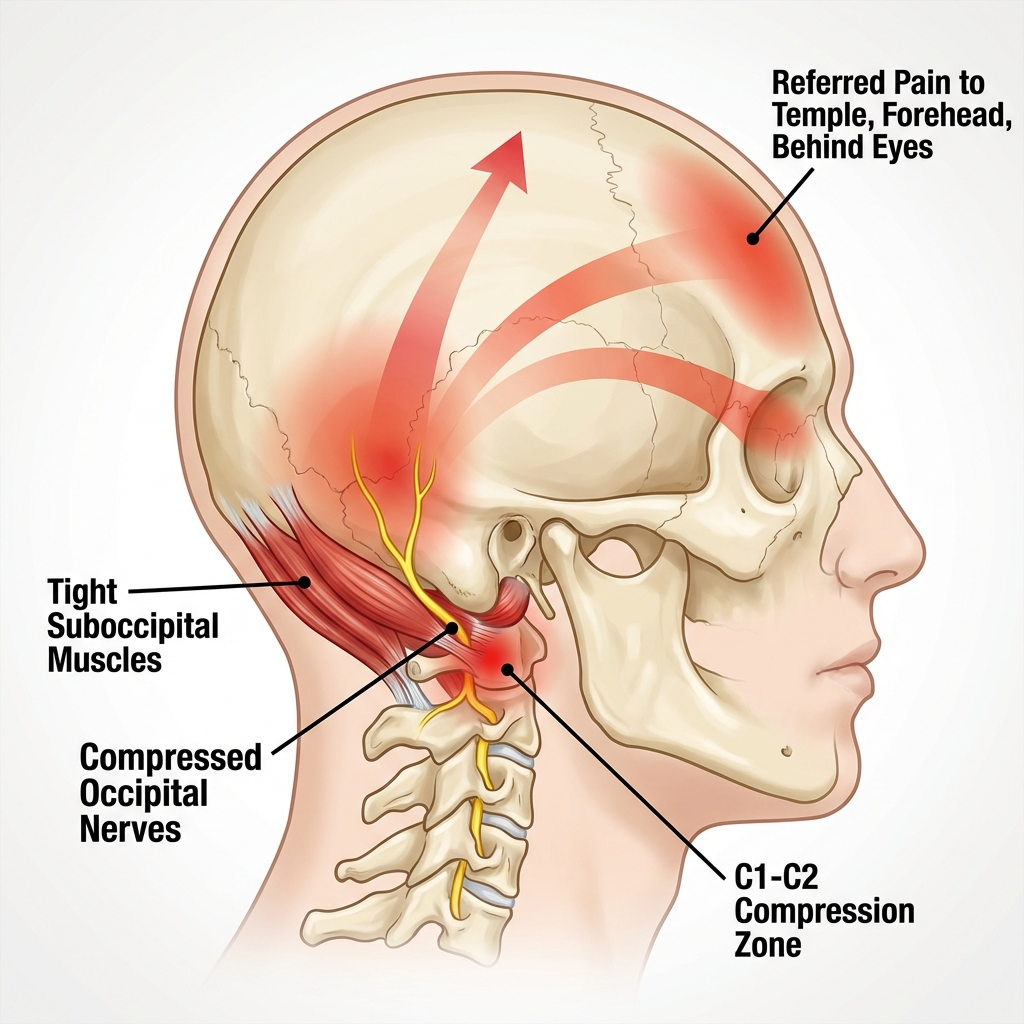
So What ARE Cervicogenic Headaches?
They're migraine-like headaches caused by compressed structures at C1-C2—where your skull meets your spine.
When the deep muscles at the base of your skull become chronically tight, they:
→ Compress your occipital nerves (causing referred pain to temples, forehead, behind the eyes)
→ Create muscle tension that radiates from neck to head
→ Refer pain in patterns that perfectly mimic migraines
This explains:
✓ Why the pain always starts in your neck
✓ Why moving your head makes it worse
✓ Why it radiates forward from back to front
✓ Why all your brain scans are normal
✓ Why Sumatriptan doesn't fully work
✓ Why the base of your skull constantly aches
Your occipital nerves need to be decompressed.
Your muscles need to release.
Nothing else will fix this.

Recent Research Confirms the Cervicogenic Headache Connection
A 2023 study in Cephalalgia examined patients diagnosed with chronic migraines who had persistent neck tension.
They received targeted treatment for cervicogenic headaches: deep heat therapy, electrical muscle stimulation, and cervical traction at C1-C2.
Result:
85% reported major symptom reduction within 4-6 weeks.
Headache frequency dropped. Pain intensity decreased. Tolerance for light and sound improved dramatically.
But most neurologists don't know about this research.
So you keep treating migraines when the real problem is compressed nerve tissue in your neck.
Over 47,000 People Have Found Relief With Neckline
Meet the device that's changing everything:
Neckline uses a precisely engineered 26-degree angle positioned exactly where those deep cervical muscles sit at C1-C2.
How it works:
Heat Therapy: Relaxes superficial muscles and increases blood flow.
EMS Technology: Reaches deep suboccipital muscles that massage can't touch. Forces them to contract and release, breaking up chronic tension.
Ergonomic Positioning: The 26-degree angle targets C1-C2 specifically—not your entire neck.
The result?
Compressed structures decompress.
Your occipital nerves stop sending constant pain signals.
The pressure at the base of your skull releases.
The headaches stop.
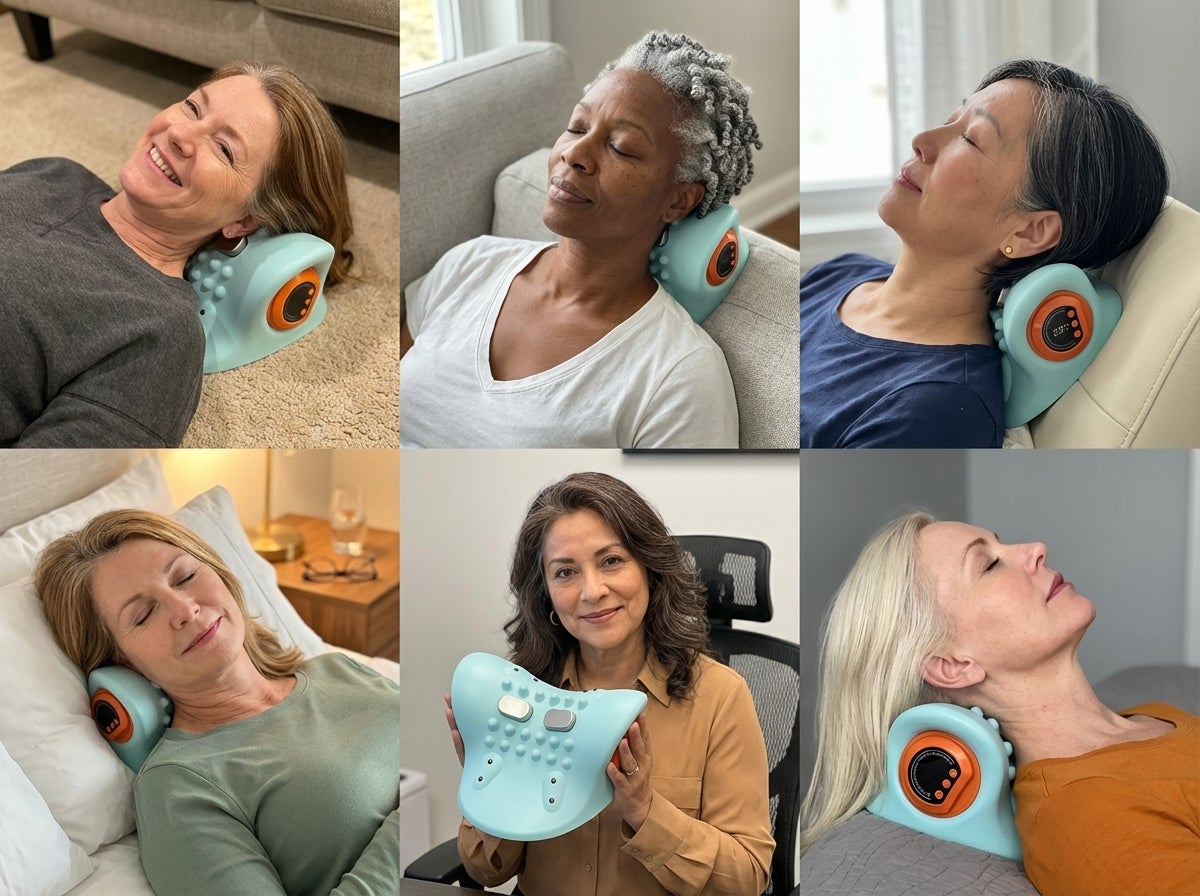
What Others Are Saying
Linda, 52:
"I was diagnosed with chronic migraines at 45. Six years of Topamax, Aimovig, and Botox. Nothing worked long-term. Two weeks with Neckline, the constant pressure at the base of my skull was gone. Turns out it was cervicogenic headaches the whole time."
Sarah, 49:
"Five years of Sumatriptan that only worked half the time. Started using Neckline daily, within three weeks I went from 15 headache days a month to 2. My neurologist was stunned."
Kevin, 47:
"Classic 'migraine' diagnosis. Except the medications barely worked and my neck always hurt. This device released the nerve compression and my 'migraines' basically disappeared. I'm off two medications now."
A Message From Rachel, The Founder
Look, I know what you're thinking.
"Another device? Another thing that won't work?"
I treated headache disorders for 11 years before I understood the cervicogenic connection.
When I started examining C1-C2 in patients with "chronic migraine" symptoms, I found the same pattern over and over:
Chronically tight suboccipital muscles. Occipital nerve compression. Referred pain that looked exactly like migraines.
When I released that compression with manual therapy, patients who'd been on three medications for years improved within weeks.
But I could only treat 20 patients a week.
That's why I created Neckline—to deliver the same nerve decompression at home.
Why hasn't your neurologist told you about this?
Because they don't know it exists.
Standard headache workups almost never include neck examination.
When you present with unilateral headaches and light sensitivity, they run brain scans, check for neurological signs, run blood work.
But a neck exam? Checking C1-C2 muscle tension?
Rarely part of the protocol.
Research shows cervicogenic headaches are present in over 60% of patients with unexplained headache symptoms.
But if they don't check the neck, they'll never find it.
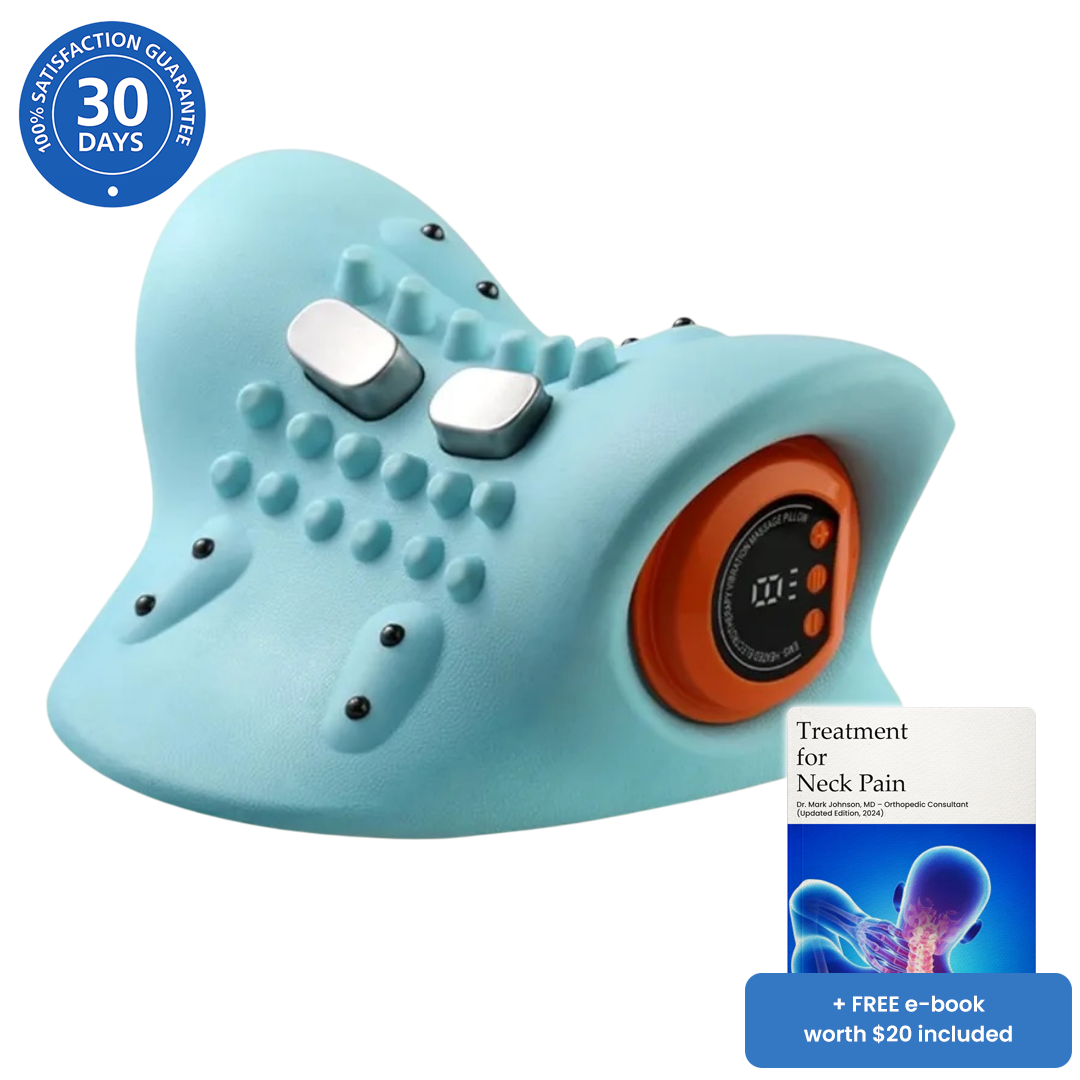
SPECIAL OFFER:
As an exclusive offer for readers of my blog, the Neckline is now offering 50% Off + Free Shipping to all new customers.
But this incredible deal only lasts while there's still inventory available, and my sources inside the company say they'll be completely sold out within 2 hours!
Plus, you have 30 days to test out your Neckline, and if you don't like it for any reason, you can get a full refund no questions asked.
Remember, there's a HUGE discount when you order 2 Neckline devices (89% of Neckline customers order 2 pieces, to give to family, have as a backup!)
Click the link above to see if Neckline™ is still offering a 50% discount and free shipping.
SPECIAL OFFER:
As an exclusive offer for readers of my blog, the Neckline is now offering 50% Off + Free Shipping to all new customers.
But this incredible deal only lasts while there's still inventory available, and my sources inside the company say they'll be completely sold out within 2 hours!
Plus, you have 30 days to test out your Neckline, and if you don't like it for any reason, you can get a full refund no questions asked.
Remember, there's a HUGE discount when you order 2 Neckline devices (89% of Neckline customers order 2 pieces, to give to family, have as a backup!)
Click the link above to see if Neckline™ is still offering a 50% discount and free shipping.

REVIEWS
This is how our website visitors rated Neckline™.
Based on 759 Reviews